

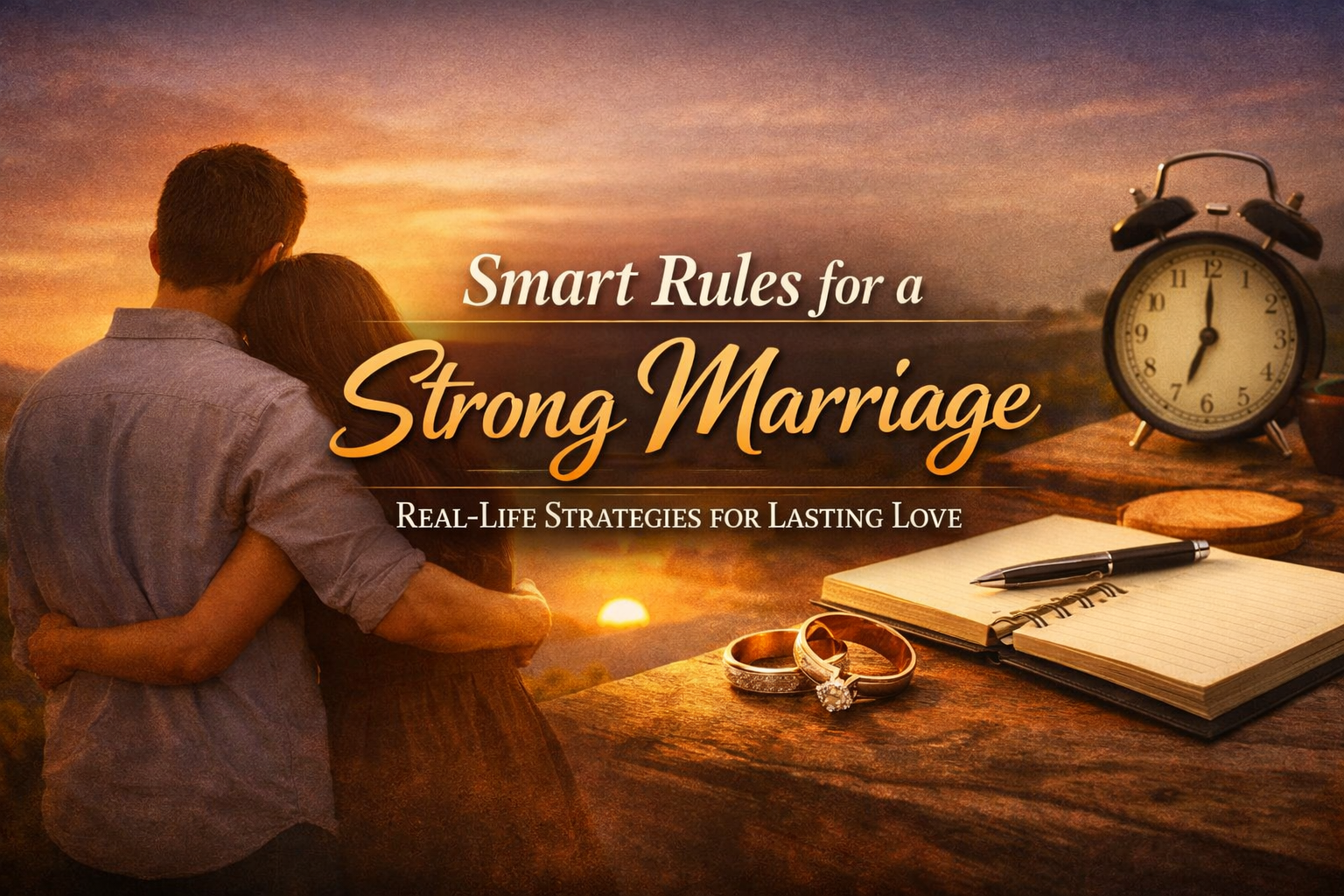
Simple rules that stop small fights from becoming lifelong damage
Most people don’t enter marriage thinking it will become difficult. Nobody stands in front of a wedding mandap or at a registry office thinking, “One day, we’ll argue about tone, money, family, priorities, and why nobody listens properly.” People step into marriage with love in their eyes and a belief that love will automatically handle the hard parts, but the truth is that love may start the journey while skills, habits, and emotional discipline are what keep the journey stable.
A strong marriage is not just built on affection and attraction, even though both matter. It is built on trust that stays intact even during conflict, respect that does not collapse under stress, and communication that remains honest without turning cruel. It is built on two people learning how to carry life together without turning every struggle into a competition. That is why the idea of “Smart Rules” matters more than most people realise, because these rules are not meant to sound nice, they are meant to keep the relationship safe when life throws its usual chaos into the mix.
The problem in many marriages is not the absence of love. The problem is that love is treated like a feeling you either have or you don’t, rather than a daily practice you protect with intention. The relationship slowly becomes reactive instead of intentional, and when that happens, every argument becomes heavier, every misunderstanding becomes personal, and even small issues start carrying the emotional weight of years. These smart rules are a way of stopping that spiral before it becomes your normal.
Rule 1: Don’t Compete, Collaborate
Marriage isn’t a scorecard, and the moment you treat it like one, you start damaging the very bond you are trying to protect.
A lot of couples don’t realise when they shift from being partners into being opponents, because it rarely happens suddenly or dramatically. It happens in small, everyday moments where both people feel tired, unappreciated, or emotionally stretched, and instead of meeting each other with softness, they start defending themselves like it is a trial.
You can spot competition in a marriage very easily because it sounds like “I do more than you,” or “You never do anything,” or “I’m the only one trying,” and once those statements become normal, the relationship begins to feel like a constant comparison rather than a shared life. The problem with comparison is that it turns love into a battlefield where each person is trying to prove their effort instead of understanding each other’s reality.
Collaboration feels different because it changes the language and the energy of conflict. When you collaborate, you stop attacking your partner as if they are the problem and you start naming the actual issue as the problem. That could be workload imbalance, emotional neglect, financial pressure, parenting fatigue, or the simple reality that both of you are running on empty. The moment you look at the issue as “us versus the problem” instead of “me versus you,” the conversation becomes more productive, because you start working toward a solution instead of chasing a victory.
A marriage becomes strong when both partners stop asking “Who is right?” and start asking “What will make our life better?” because the goal is not to win the argument, the goal is to keep the relationship healthy enough that both people can breathe inside it.
Rule 2: Listen First, React Later
Most fights don’t become ugly because the issue is huge. They become ugly because one person reacts too fast and the other person feels unheard.
Listening sounds basic, but it is one of the hardest things to do when emotions are active, because listening requires patience, and patience is exactly what disappears when you feel accused, misunderstood, or emotionally cornered. In those moments, the instinct is to defend yourself quickly, to correct the other person, to prove your point, or to remind them how much you already do. Unfortunately, the faster you jump in, the more the other person feels dismissed, and once someone feels dismissed, they do not speak softly, they speak louder, sharper, and more emotionally.
A powerful marriage habit is learning to pause before reacting, because the pause gives you time to separate your ego from the situation. When your partner is speaking with emotion, it doesn’t always mean they want a solution immediately, and it definitely does not always mean they want to debate facts like a courtroom. Many times, they want emotional support first, and once the emotions settle, the logic becomes easier.
One of the simplest and most effective questions a partner can ask during tense moments is, “Do you want solutions right now, or do you want support?” because that question alone signals respect, emotional maturity, and safety. It tells the other person that their feelings matter, and it reduces the pressure to perform or justify their emotions.
What makes this rule powerful is that it stops arguments from escalating into character attacks. It keeps the conversation grounded in reality instead of turning it into a fight where both people try to protect themselves by hurting the other person first.
Rule 3: Money Transparency Is Non-Negotiable
If trust is the backbone of marriage, money transparency is one of the biggest ways that trust is tested.
Many couples avoid money conversations because they think talking about money will create conflict, but avoiding money does not prevent conflict, it simply delays it until the consequences become bigger. Money fights are rarely only about numbers, they are about security, control, responsibility, lifestyle, freedom, and sometimes even childhood wounds. One person may feel safe when savings are high, another person may feel happy when life is comfortable, and both are valid, but when money becomes secretive, trust starts collapsing.
Hidden spending hurts not only because money was spent, but because it was hidden, and hiding creates suspicion, while suspicion creates distance. Once distance enters, couples stop sharing openly, and the relationship starts feeling emotionally unsafe. Even if you have separate accounts, even if one person earns more, even if your financial setup is modern and flexible, transparency is still required because marriage is not just a romantic connection, it is a partnership where both people are building a life together.
The healthiest habit couples can build is having regular money check-ins where the goal is alignment rather than blame, because the conversation becomes easier when both partners approach it like teammates. When you discuss bills, savings goals, big purchases, and future plans as a shared responsibility, money stops being a weapon and starts becoming a tool to build the life you want.
Rule 4: Boundaries With Family and Friends
A marriage becomes fragile when outside voices get too much access to inside problems.
This topic is sensitive because family and friends are important, and nobody wants to sound disrespectful or selfish, but marriage requires boundaries to survive long-term, especially in cultures where family involvement is heavy and opinions come freely. The challenge is not that relatives care, the challenge is that some relatives cross lines without noticing, and when that happens repeatedly, one partner starts feeling unsupported, while the other partner feels torn between loyalty and peace.
Healthy boundaries do not mean you cut people off or disrespect elders. Healthy boundaries mean you decide what stays private, what gets shared, and what is handled as a couple. A relationship loses stability when every small disagreement becomes an external discussion, because once you invite outsiders into private issues, their perspective stays even after you forgive each other.
A strong couple acts like a united team in front of the world, even when they are working through things internally. They do not let family politics, friend advice, or social expectations decide how their marriage should function. They decide together, and they protect each other publicly, because public respect creates private safety.
Rule 5: Protect Time Together
Many marriages don’t break because of betrayal. They break because the relationship becomes emotionally neglected through routine.
It is very easy for couples to slip into parallel lives where both are busy, both are stressed, both are working hard, and both are handling responsibilities, but neither is truly connecting. They live in the same home but emotionally feel like strangers, because the relationship becomes a background tab that is always open but never clicked.
Time together doesn’t need expensive dates or weekend getaways. It needs consistency and attention. It needs small daily rituals that keep the connection alive, like tea together in the morning, a slow conversation after dinner, a short walk, a few minutes without phones, or even sitting together while doing nothing important but feeling emotionally present.
When you protect time together, you protect intimacy, and when intimacy stays alive, the marriage feels like a relationship rather than a logistical arrangement.
Rule 6: Respect Growth and Space
A healthy marriage does not trap you. It expands you.
People change over time, and that is not a threat, it is part of being human. The danger is when one partner grows and the other starts feeling insecure, because insecurity leads to control, and control kills love faster than most people realise. A relationship becomes toxic when one person starts treating the other person’s hobbies, friendships, or ambitions as a danger to the marriage.
Growth should be celebrated, not feared. When you encourage your partner’s progress, you build pride and admiration, and admiration is one of the most underrated forms of intimacy. When your partner feels supported instead of monitored, they feel free, and when someone feels free inside a marriage, they stay by choice, not because they are trapped by expectation.
Rule 7: Fight Fair
Every couple fights, but not every couple fights in a way that protects dignity.
Fighting fair means you argue about the issue without attacking the person, because when you attack the person, you create emotional damage that stays even after the issue is resolved. Name-calling, mocking, silent punishment, bringing old mistakes into new arguments, threatening separation during anger, or insulting someone’s family or character are not conflict tactics, they are relationship toxins.
A fair fight stays focused on the present issue, it stays respectful even when emotions are high, and it includes repair afterward, because repair is what restores safety. Repair can be a sincere apology, a hug, a calm conversation, or a plan for next time, but it cannot be pride, silence, or emotional coldness.
A marriage becomes strong when both partners understand that disagreement is normal, but disrespect is optional, and you always have the option to choose maturity.
Rule 8: Keep Intimacy Alive
Long-term love survives not on big romantic gestures, but on small daily reminders that you still choose each other.
Intimacy is not only physical. It is emotional closeness, gratitude, admiration, affection, attention, and the feeling that you are seen. Many couples stop expressing love because they assume love is understood, but love needs expression to stay alive. A simple compliment, a warm hug, a gentle touch, a smile, a thank you, or a supportive message during a stressful day can keep the relationship emotionally warm.
When intimacy dies, relationships don’t always end immediately, but they start feeling empty. People start feeling lonely even while living together. That loneliness is dangerous because it creates vulnerability, not always for cheating, but for resentment, bitterness, and emotional disconnection.
Keeping intimacy alive is not about being dramatic. It is about staying emotionally present, even in small ways, so your partner never feels invisible.
The Marriage That Lasts Isn’t the One That Never Struggles
It’s the one that knows how to recover.
A strong marriage is not perfect, and it does not need to be. Real life will bring stress, family challenges, financial burdens, health issues, career pressure, and moments where both of you feel emotionally drained. The difference between couples who survive and couples who break is not luck, it is behaviour. It is habits. It is the ability to protect the relationship even when emotions are high.
These smart rules are not cute motivational lines. They are practical relationship principles that build emotional safety, trust, and long-term stability. When you live them consistently, marriage becomes less exhausting and more supportive, because you stop fighting each other and start fighting life together.
And that is the point of marriage in the real world. It is not to look perfect. It is to feel like home.