




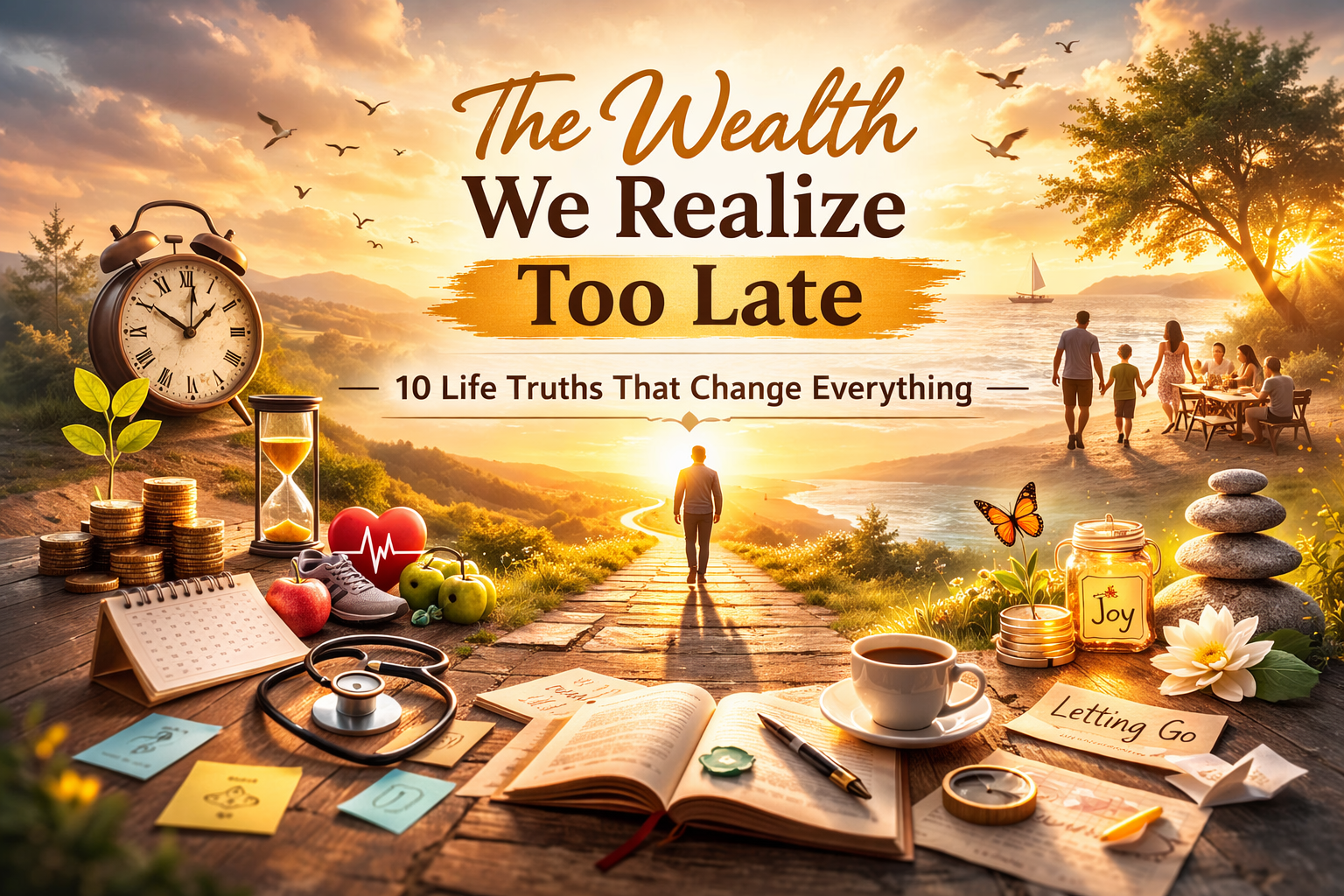
The Wealth We Realize Too Late
There comes a stage in life where success stops being measured by how much you have accumulated and begins to be measured by how much you have experienced, preserved, and shared with others.
Earlier in life, most individuals are conditioned to chase performance metrics that look impressive on paper, including career growth, income levels, social validation, and the acquisition of material comforts that signal progress in the modern world.
However, as years begin to compress into what feels like shorter intervals, the perspective through which people interpret success undergoes a noticeable transformation.
Many of the realizations that appear obvious in hindsight remain invisible during the decades when ambition dominates decision making.
Individuals often discover that what they assumed would matter most rarely appears in their most meaningful memories, while moments that once seemed ordinary become deeply significant when viewed from a later stage of life.
The following ten truths tend to surface repeatedly in the reflections of those who have lived long enough to compare intention with outcome.
Truth One: Time Is the Only Currency That Never Returns
One of the most profound recognitions that emerges over time is that time functions as a form of wealth that cannot be replenished once it has been spent. Financial losses can often be recovered through effort, strategic decisions, or favorable circumstances, but the hours and years that pass without intention disappear permanently.
Many people acknowledge that their greatest regret does not stem from money lost in failed ventures or investments, but from moments that were wasted on distractions, unnecessary obligations, or delayed aspirations.
Earlier in life, postponing meaningful experiences in favor of professional commitments may appear practical or responsible.
Yet as decades pass, individuals begin to recognize that opportunities for connection, exploration, and personal fulfillment were frequently sacrificed in the pursuit of achievements that provided only temporary satisfaction.
The realization that time moved faster than anticipated often becomes a turning point that reshapes priorities for the years that remain.
Truth Two: Health Cannot Be Replaced Once It Is Compromised
Health is rarely appreciated when it exists without limitation, largely because its absence has not yet introduced discomfort into daily routines. Many individuals assume that physical endurance and mental clarity will continue indefinitely, which leads to the postponement of habits that support long term well being. Convenience frequently takes precedence over discipline, particularly when professional responsibilities or social expectations compete for attention.
Over time, however, the cumulative effects of lifestyle choices begin to surface. Reduced mobility, chronic fatigue, or stress related conditions often reveal that sustained wellness is the result of consistent daily actions rather than dramatic interventions. The understanding that long term health depends on habits such as balanced nutrition, adequate rest, and regular movement often arrives only after these habits become more difficult to implement.
Truth Three: Relationships Define the Quality of Life
Professional recognition and material success may provide comfort or security, but they rarely replace the emotional support that arises from meaningful relationships. When individuals reflect on the moments that brought them genuine happiness, they often recall shared experiences with family members, friendships that endured over decades, or conversations that created a sense of belonging.
Investing time and empathy into relationships frequently produces a form of fulfillment that cannot be replicated through solitary achievement. However, relationships require consistent presence, patience, and understanding, which can become difficult to sustain when schedules are dominated by career demands or personal ambitions. Many people later realize that the dividends generated by emotional connections exceed those produced by financial investments.
Truth Four: Simplicity Often Creates More Peace Than Progress
Modern lifestyles frequently encourage the accumulation of responsibilities, possessions, and commitments under the assumption that complexity represents advancement. Earlier generations, however, often found satisfaction in predictable routines, shared meals, and time spent in familiar environments. Simplicity can provide a sense of stability that allows individuals to focus on experiences rather than obligations.
As people age, the appeal of maintaining fewer commitments and possessions tends to increase. The recognition that constant pursuit of improvement may introduce unnecessary stress without delivering proportional benefits often leads individuals to reassess their priorities. Peace frequently emerges not from acquiring more, but from appreciating what is already present.
Truth Five: Hardship Develops Strength That Comfort Cannot Provide
Adversity seldom appears desirable in the moment, yet many individuals later acknowledge that difficult experiences contributed significantly to their resilience. Challenges such as financial instability, personal loss, or professional setbacks often require persistence, adaptability, and emotional endurance. These qualities can become invaluable when future uncertainties arise.
Success achieved without resistance may build confidence, but it rarely cultivates the same level of perseverance that emerges from navigating hardship. The patience and determination developed during challenging periods often become more reliable sources of strength than natural talent or favorable circumstances.
Truth Six: Money Functions Best as a Tool Rather Than an Objective
Financial stability is essential for meeting basic needs and reducing stress related to uncertainty. However, beyond a certain threshold, additional wealth does not necessarily produce proportional increases in satisfaction. Many individuals discover that money is most effective when it enables experiences, supports relationships, or facilitates generosity.
Treating money as an endpoint rather than a resource can lead to the neglect of other priorities such as health or emotional well being. Over time, the distinction between financial comfort and meaningful happiness becomes more apparent, encouraging individuals to reconsider how their resources are allocated.
Truth Seven: Kindness Outlasts Reputation
Professional accomplishments may attract admiration, but they do not always guarantee lasting respect. The manner in which individuals treat others often leaves a more enduring impression than their achievements. Acts of compassion, generosity, and forgiveness can strengthen communities and create support networks that remain valuable during periods of uncertainty.
Being remembered for empathy rather than authority frequently becomes a source of pride that surpasses recognition derived from status or influence. Reputation built through kindness often persists long after professional milestones have faded from memory.
Truth Eight: Letting Go Is an Essential Skill
Life inevitably introduces changes that cannot be prevented or reversed. Opportunities may expire, abilities may evolve, and circumstances may shift in ways that challenge expectations. Attempting to maintain control over every outcome can create frustration that interferes with emotional well being.
Acceptance involves acknowledging that some events exist beyond personal influence while focusing attention on what can still be shaped or improved. Learning to release attachments to outcomes can create space for adaptability and resilience.
Truth Nine: Joy Should Not Be Deferred Indefinitely
Many individuals postpone meaningful experiences in anticipation of a more convenient or secure future moment. They assume that ideal conditions will eventually arise for pursuing travel, creative endeavors, or important conversations. Unfortunately, circumstances rarely align perfectly, and opportunities may disappear before action is taken.
Choosing to engage in fulfilling activities despite uncertainty can create memories that retain value long after material achievements lose significance. Acting in the present often proves more rewarding than waiting for an unpredictable future.
Truth Ten: Life Feels Shorter Than Expected
Despite setbacks or challenges, many people later express surprise at how quickly life progressed. Years that once seemed expansive can compress into brief recollections once routines become familiar. This perception encourages a shift in priorities toward experiences that create lasting meaning rather than temporary satisfaction.
Focusing on gratitude, connection, and purposeful activity can enhance the quality of life even as time continues to advance. The recognition that life is finite often motivates individuals to invest their remaining years more intentionally.
Conclusion: A Balanced Definition of Success
Achievement, financial stability, and personal growth remain valuable pursuits, yet they gain significance when balanced with health, relationships, and meaningful experiences. Understanding these truths earlier in life does not eliminate uncertainty or hardship, but it can influence daily decisions in ways that support long term fulfillment.
A life measured solely by accumulation may appear impressive from a distance, but a life guided by intention often feels richer when viewed from within.