






There is a moment most people recognize but rarely talk about openly. You are in the middle of a conversation that feels heavier than it should. You have already explained your side once, maybe twice, maybe ten times. The words keep coming, yet nothing changes.
The other person is still not listening, still not understanding, still holding onto their version of the story. You walk away from that interaction feeling drained, replaying every sentence in your head, wondering what you could have said differently.
And somewhere in that moment, a quiet thought appears. What if the problem was never the explanation?
What if the real strength was never in staying and trying harder, but in knowing when to leave?
This is the kind of strength that does not get celebrated often. It does not look dramatic or heroic. It does not win arguments or prove points. Yet it changes the way you live your life in ways that nothing else can. It is the strength of walking away.
Not Every Situation Deserves Your Explanation
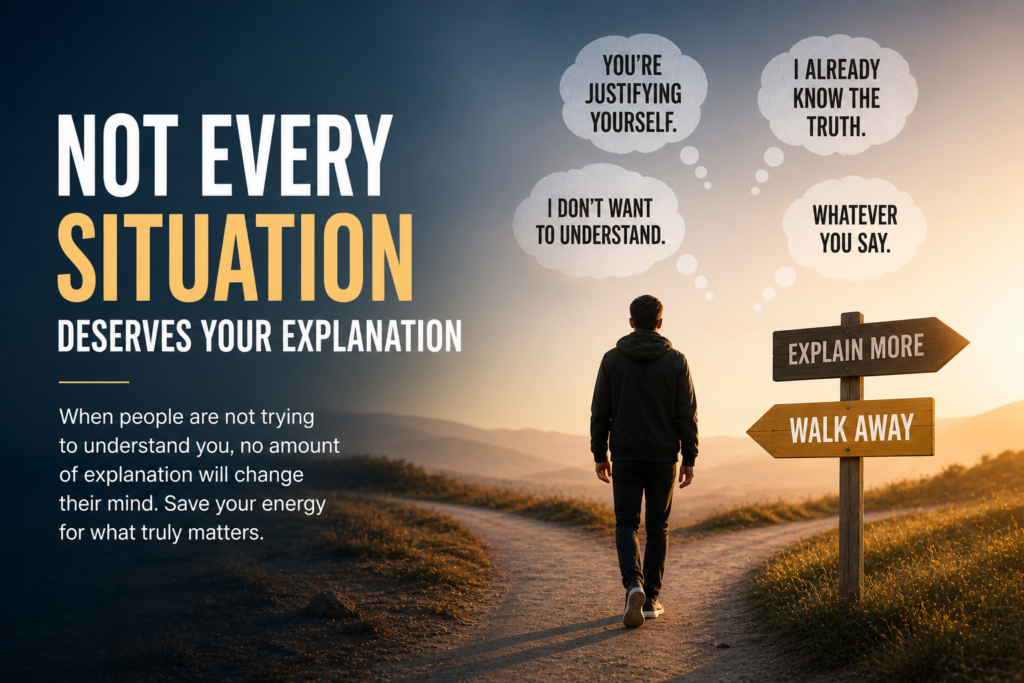
The desire to be understood runs deep. It shapes how we communicate, how we respond, and how much effort we invest in conversations that matter to us. When someone misunderstands you, the natural instinct is to clarify. When they question your intentions, you explain. When they misinterpret your actions, you try again.
However, there is an uncomfortable truth that most people learn the hard way. Not everyone is trying to understand you.
Some people listen only to respond. Others listen only to defend their position. And some have already decided what they believe about you long before the conversation even begins. In these situations, your explanation does not bring clarity. It simply becomes part of a cycle that keeps repeating without resolution.
You might find yourself changing your words, adjusting your tone, trying to be more precise, more patient, more persuasive. Yet nothing shifts. The conversation does not move forward. Instead, it pulls you deeper into frustration.
This is where a difficult question needs to be asked. Are you explaining to be understood, or are you explaining because you feel the need to be accepted?
There is a difference. And once you recognize it, your approach begins to change.
Walking away from such situations is not about giving up on communication. It is about recognizing where communication has lost its purpose. It is about understanding that your energy is valuable, and not every interaction deserves access to it.
Walking Away Is Not Weakness. It Is Self-Respect
Strength is often associated with endurance. The ability to stay, to fight, to push through discomfort. While that kind of strength has its place, it is not always the right response.
There is another kind of strength that requires more awareness. It is the ability to step back when something no longer serves you, even when everything around you suggests that you should stay. This kind of strength does not rely on proving anything to anyone. It relies on understanding your own boundaries.
When you continue to stay in situations that disturb your peace, you slowly begin to normalize that discomfort. What once felt unacceptable starts to feel familiar. Over time, you adjust your expectations, not because the situation has improved, but because you have learned to tolerate it.
This is where self-respect begins to fade, not in a dramatic moment, but in small, repeated decisions to stay when you know you should leave.
Walking away reverses that pattern. It sends a different message to yourself. It says that your peace matters. It reinforces the idea that you do not need to endure everything to prove your strength.
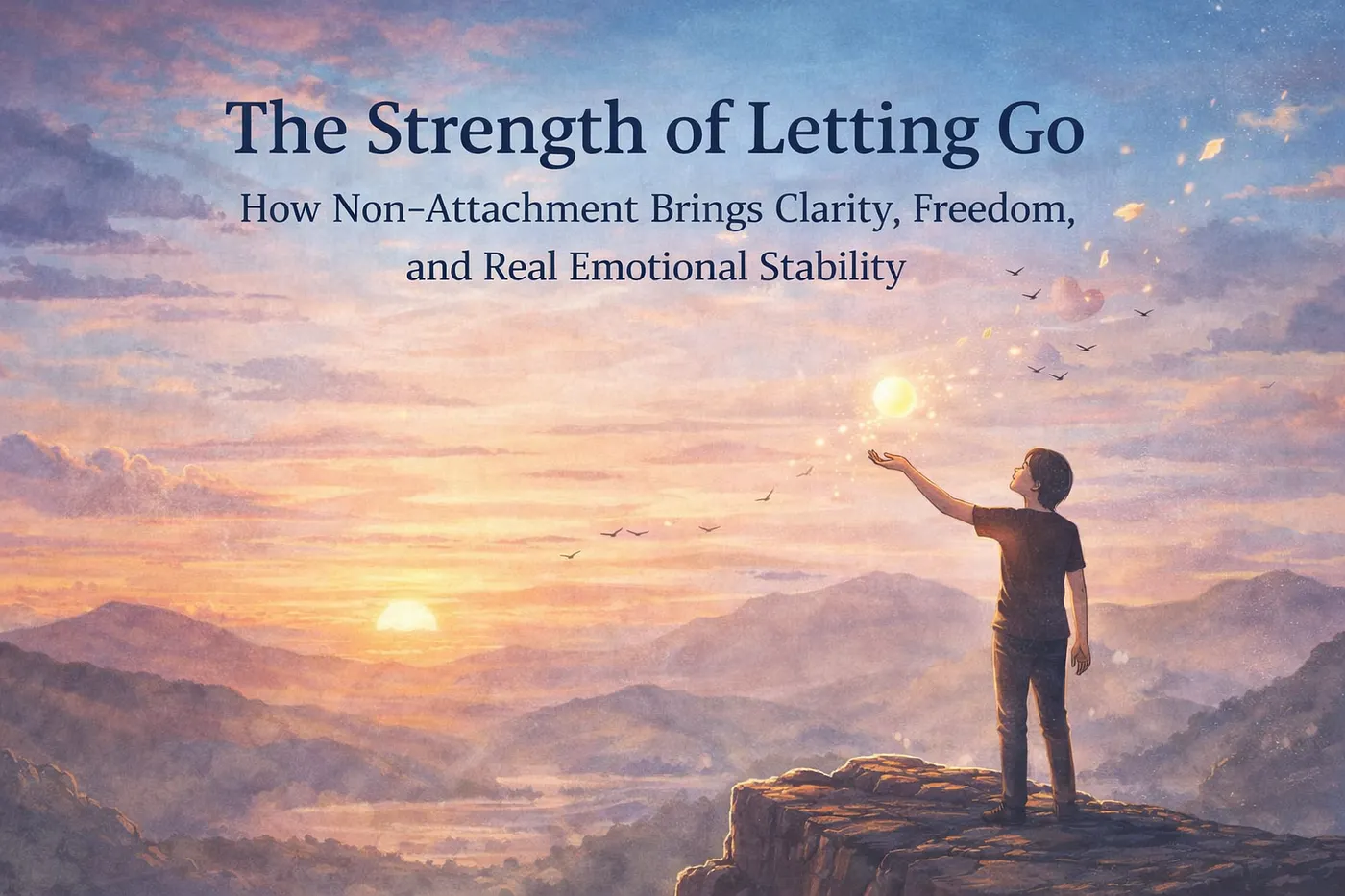
Real strength is not always about holding on. Sometimes it is about letting go at the right time.
You Do Not Need to Prove Yourself to Everyone
There is a subtle pressure that exists in almost every interaction. The pressure to be seen correctly. To be understood as fair, honest, capable, or well-intentioned. When that perception is challenged, the instinct is to defend it.
You explain your intentions. You justify your actions. You try to correct the misunderstanding. And when that does not work, you try again.
But there is a limit to what explanation can achieve. Some people are not looking for clarity. They are looking for confirmation of what they already believe. In such situations, your effort becomes an endless loop with no real outcome.
This raises another important question. How much of your energy is spent trying to control how others see you?
The answer is often more than we realize.
Letting go of that need is not easy. It requires you to accept that not everyone will understand you, and more importantly, that not everyone needs to. Your identity is not defined by how many people agree with you. It is defined by how clearly you understand yourself.
Walking away from the need to prove yourself is not an act of indifference. It is an act of freedom.
Silence Protects More Than Arguments Ever Will
Arguments rarely stay within their original boundaries. What begins as a simple disagreement can quickly evolve into something far more complex. Emotions rise. Words lose precision. Intent gets replaced by reaction.
In those moments, it becomes easy to say things that do not reflect who you truly are. You respond based on how you feel, not on what you mean. Later, when the intensity fades, you are left with the consequences of those words.
This is where silence becomes powerful.
Silence is not the absence of something. It is a deliberate choice. It creates distance between you and the moment. It allows you to step back before the situation escalates beyond control.
Choosing silence does not mean you have nothing to say. It means you have decided that this is not the moment, not the place, or not the person with whom those words should be shared.
There is a certain dignity in restraint. A sense of control that comes from not reacting impulsively. Walking away before an argument escalates is not avoidance. It is awareness in action.
Peace Is More Valuable Than Winning
There is a moment in every argument where the focus shifts. It is no longer about understanding each other. It becomes about winning.
You want to prove your point. You want to be right. And when you succeed, there is a brief sense of satisfaction. A feeling that you have defended yourself effectively.
But that feeling does not last.
What remains is the emotional cost of the conflict. The tension. The energy that was spent. The lingering thoughts that replay long after the conversation ends.
Winning an argument does not always bring peace. In many cases, it takes it away.
When you begin to value peace over victory, your decisions start to change. You become more selective about what you engage in. You no longer feel the need to respond to everything. You start to recognize that not every disagreement requires your participation.
Sometimes, the strongest response is no response at all.
Walking away becomes easier when you understand that your peace is not something to be traded for temporary validation.
Maturity Is Knowing When to Stop Explaining and Start Healing
There comes a point where repeating your story stops bringing clarity. Instead, it begins to reopen wounds. You find yourself revisiting the same emotions, the same frustration, the same sense of being misunderstood.
At that point, the question is no longer about communication. It becomes about healing.
Maturity is not defined by how well you can argue your case. It is defined by how clearly you can recognize when continuing the conversation is doing more harm than good.
Healing requires space. It requires distance from situations that continuously trigger emotional strain. It requires you to shift your focus from being understood by others to understanding yourself.
Walking away creates that space.
It allows you to step out of the cycle of explanation and into a process of reflection. It gives you the opportunity to rebuild your energy instead of constantly spending it.
Not every situation will end with closure. Not every conversation will lead to mutual understanding. Accepting this is not easy, but it is necessary.
Because sometimes, the closure you are looking for is not something others can give you. It is something you create for yourself.
Sometimes Silence Says Everything
There is a shift that happens gradually. You stop reacting the way you used to. You stop feeling the need to respond to every comment, every misunderstanding, every provocation.
At first, it feels unnatural. There is an urge to step back into the familiar pattern of explaining and defending. Over time, that urge begins to fade.
What replaces it is clarity.
Your silence starts to communicate more than your words ever did. It sets boundaries without confrontation. It signals that you are no longer available for certain dynamics.
Walking away without a final explanation does not leave things incomplete. It completes them in a different way.
Sometimes, the most powerful message you can send is not something you say, but something you choose not to engage with.
The Cost of Staying Too Long
Much of the focus in life is placed on the fear of leaving. What will you lose? What will others think? What if things could have been different if you had stayed a little longer?
What is rarely considered is the cost of staying.
Remaining in situations that drain you does not just affect your mood. It shapes your thinking. It influences your confidence. It changes how you see yourself.
Over time, this can lead to a gradual loss of clarity. You begin to question your instincts. You tolerate things that once felt unacceptable. You adjust yourself to fit environments that do not support your growth.
Walking away is not always about gaining something immediately. Sometimes it is about stopping the slow loss that has been happening all along.
Choosing Yourself Is Not Selfish
There is a belief that prioritizing yourself comes at the expense of others. This belief keeps many people stuck in situations that clearly do not serve them.
Choosing yourself is not about ignoring others. It is about acknowledging your own needs. It is about recognizing that your well-being matters just as much as anyone else’s.
You cannot continue to give when you are already depleted. You cannot maintain balance in your life if you are constantly sacrificing your own peace.
Walking away from situations that harm you is not selfish. It is necessary.
It allows you to preserve your energy, your clarity, and your sense of self. It ensures that when you do choose to engage, you do so from a place of strength rather than exhaustion.
Closing Reflection
Imagine going back to that moment at the beginning. The conversation that drained you. The words that kept repeating. The effort that led nowhere.
Now imagine choosing differently.
Not explaining again. Not trying harder. Not staying longer than necessary.
Just walking away.
Not out of frustration, but out of clarity. Not out of weakness, but out of strength.
Because sometimes, the most important progress you can make in life does not come from holding on. It comes from knowing exactly when to let go and having the courage to act on it.