





There is a strange pattern in human behavior that almost everyone experiences at some point in life. We can survive pressure, long working hours, uncertainty, heartbreak, financial stress, career confusion, and even failure itself. But the one thing that slowly drains us from the inside is avoidance.
Not the problem.
The avoidance of the problem.
That unfinished conversation.
That career move you know you should make.
That health issue you keep postponing.
That relationship you know is breaking.
That dream you keep calling “someday.”
Most people imagine difficult problems as giant disasters crashing into life all at once. In reality, many problems grow because they sit untouched for too long. What starts as a small crack slowly becomes structural damage. What could have been solved with one difficult week eventually turns into years of emotional exhaustion.
The frustrating part is that avoidance feels productive in the beginning. It gives temporary relief. Your brain says, “I’ll deal with it later.” For a few hours, maybe even a few weeks, life feels easier because you pushed the discomfort away.
But unresolved problems charge emotional interest.
Every day you avoid them, they grow heavier in your mind.
You start thinking about them during random moments. While driving. While scrolling social media. While trying to sleep. While pretending to focus during meetings. The problem becomes background noise inside your head, constantly consuming energy even when you are doing nothing about it.
And over time, the fear of facing the problem becomes bigger than the problem itself.
That is where people get stuck.
Not because they are weak.
Not because they are incapable.
But because the mind naturally tries to protect itself from discomfort, uncertainty, embarrassment, rejection, or failure.
The problem is that life rewards movement, not avoidance.
The people who grow emotionally, financially, professionally, and mentally are not the ones who never face difficult situations. They are usually the ones who develop the ability to confront difficult things before they become impossible to manage.
That ability changes everything.
Most Problems Become Bigger in Imagination Than in Reality
One of the most dangerous things about avoidance is how imagination magnifies problems.
When something remains unresolved, the brain fills the gap with fear.
A simple conversation starts feeling like a life-changing confrontation.
A career transition feels like jumping off a cliff.
Starting a business feels like guaranteed failure.
Applying for a role feels humiliating before it even happens.
Going to therapy feels like admitting defeat.
Checking bank statements feels terrifying.
Making a phone call feels emotionally exhausting.
The longer the delay continues, the more emotionally dramatic the situation becomes in your head.
Reality rarely matches the horror story created by overthinking.
People often spend months stressing over conversations that end in ten minutes.
They delay medical appointments that bring relief instead of disaster.
They postpone difficult decisions only to discover that clarity appears after action, not before it.
This is why unresolved problems create emotional fatigue. Your brain remains trapped in “threat mode.” Even during peaceful moments, part of your mental energy stays occupied by unfinished business.
That mental load slowly affects confidence, motivation, sleep, productivity, and relationships.
Many people think they are lazy or unmotivated when in reality they are mentally exhausted from carrying unresolved emotional weight.
Naming the Problem Changes Your Relationship With It
A surprising number of people never clearly define what they are actually struggling with.
They say things like:
“I feel stuck.”
“I feel stressed.”
“I don’t know what’s wrong.”
“Everything feels overwhelming.”
But vague problems create vague fear.
The moment you clearly identify the issue, the emotional fog starts breaking.
Instead of:
“My life is falling apart.”
It becomes:
“I am afraid of changing careers because I fear financial instability.”
That is specific.
That is manageable.
That is solvable.
The human mind handles defined problems better than undefined anxiety.
This is why journaling, writing thoughts down, or even speaking honestly with someone can create immediate relief. The issue finally becomes visible instead of floating around emotionally without shape.
You cannot solve what you refuse to identify.
And sometimes the real problem is not even the surface issue.
A person may think they are avoiding gym workouts when the actual issue is insecurity.
Someone may believe they are procrastinating at work when the deeper issue is burnout.
A failing relationship may not be about communication at all. It may be resentment that was never addressed honestly.
Surface problems often hide emotional roots underneath them.
Until those roots are acknowledged, nothing truly changes.
Big Problems Become Manageable When Broken Into Smaller Decisions
Human beings get overwhelmed by size.
A massive project creates paralysis.
A huge debt creates fear.
A major life transition creates anxiety.
The brain looks at the entire mountain instead of the next step.
That is where people freeze.
The reality is that almost every difficult problem in life becomes easier when reduced into tiny actions.
Not because the challenge disappears.
Because progress becomes psychologically possible.
Someone trying to rebuild their health does not need to “transform their life.” They need to walk today.
Someone trying to switch careers does not need to figure out the next ten years. They need to update one CV.
Someone trying to repair a relationship does not need to solve everything overnight. They need one honest conversation.
Momentum matters more than intensity.
Most people wait for confidence before taking action.
But confidence usually arrives after movement starts.
Small actions interrupt fear.
And once movement begins, the emotional grip of avoidance starts weakening.
Perfectionism Is Often Fear Wearing Expensive Clothes
Many people do not avoid problems because they are careless.
They avoid them because they want to solve them perfectly.
That sounds admirable until you realize perfectionism can become a sophisticated form of procrastination.
People delay launching businesses because the idea is “not ready.”
They postpone writing because the article is “not perfect.”
They avoid difficult conversations because they want the “right moment.”
They never start learning because they fear looking inexperienced.
Perfection creates impossible standards.
And impossible standards create paralysis.
Life rarely rewards perfect action.
It rewards consistent action.
Most successful people did not move confidently from day one. They adjusted while moving. They made mistakes publicly. They learned through imperfect execution.
Waiting until fear disappears is a dangerous strategy because fear often fades only after repeated exposure.
You become comfortable by doing difficult things repeatedly, not by endlessly preparing for them mentally.
Accountability Changes Human Behavior Faster Than Motivation
Motivation is unreliable.
Some mornings you feel driven.
Some mornings you feel emotionally empty.
Some weeks you feel unstoppable.
Some weeks you question everything.
This is why accountability matters.
Human beings behave differently when someone else is aware of their commitments.
A friend asking about your progress.
A mentor expecting updates.
A coach checking consistency.
A public commitment creating pressure.
These external structures reduce the chance of emotional escape.
This is also why many people improve faster in communities than in isolation.
Isolation protects comfort.
Accountability creates movement.
The interesting part is that accountability does not always require another person. Systems can create accountability too.
Calendars.
Deadlines.
Habit trackers.
Scheduled routines.
Financial commitments.
Public goals.
These structures reduce emotional negotiation.
Because one of the biggest dangers of avoidance is how convincing our excuses become when nobody challenges them.
Fear Usually Shrinks After Action Begins
Fear feels strongest before action.
That is important to understand.
Before a presentation.
Before a difficult conversation.
Before applying for a role.
Before starting therapy.
Before resigning from a toxic environment.
Before publishing something meaningful.
The emotional resistance feels enormous.
But once action begins, the nervous system starts adapting.
This is one of the biggest psychological misunderstandings people have about courage. Courage is not the absence of fear. Courage is movement despite fear.
Most people imagine brave individuals as naturally fearless.
That is rarely true.
They simply became more familiar with discomfort.
And familiarity reduces emotional intensity.
A person terrified of public speaking eventually adapts after enough exposure.
Someone afraid of rejection slowly becomes resilient after repeated experiences.
A person scared of failure eventually realizes survival is still possible after setbacks.
Experience rewires fear faster than overthinking ever will.
Difficult Problems Often Contain the Growth We Need Most
There is another uncomfortable truth people eventually discover.
The hardest problems in life are often connected to the biggest transformations.
Not always immediately.
Not always painlessly.
But consistently.
The difficult conversation teaches boundaries.
The career failure teaches direction.
The financial struggle teaches discipline.
The heartbreak teaches emotional awareness.
The burnout teaches self-respect.
The uncertainty teaches resilience.
This does not mean suffering is magical.
It means challenges force awareness.
Many people become stronger because life eventually removes the option of staying emotionally asleep.
Growth rarely happens during comfort.
Comfort maintains identity.
Pressure reveals identity.
And sometimes the life you want exists behind the exact challenge you keep avoiding.
That promotion may require difficult visibility.
That healthier life may require uncomfortable discipline.
That peace may require ending something emotionally familiar.
That confidence may require repeated failure first.
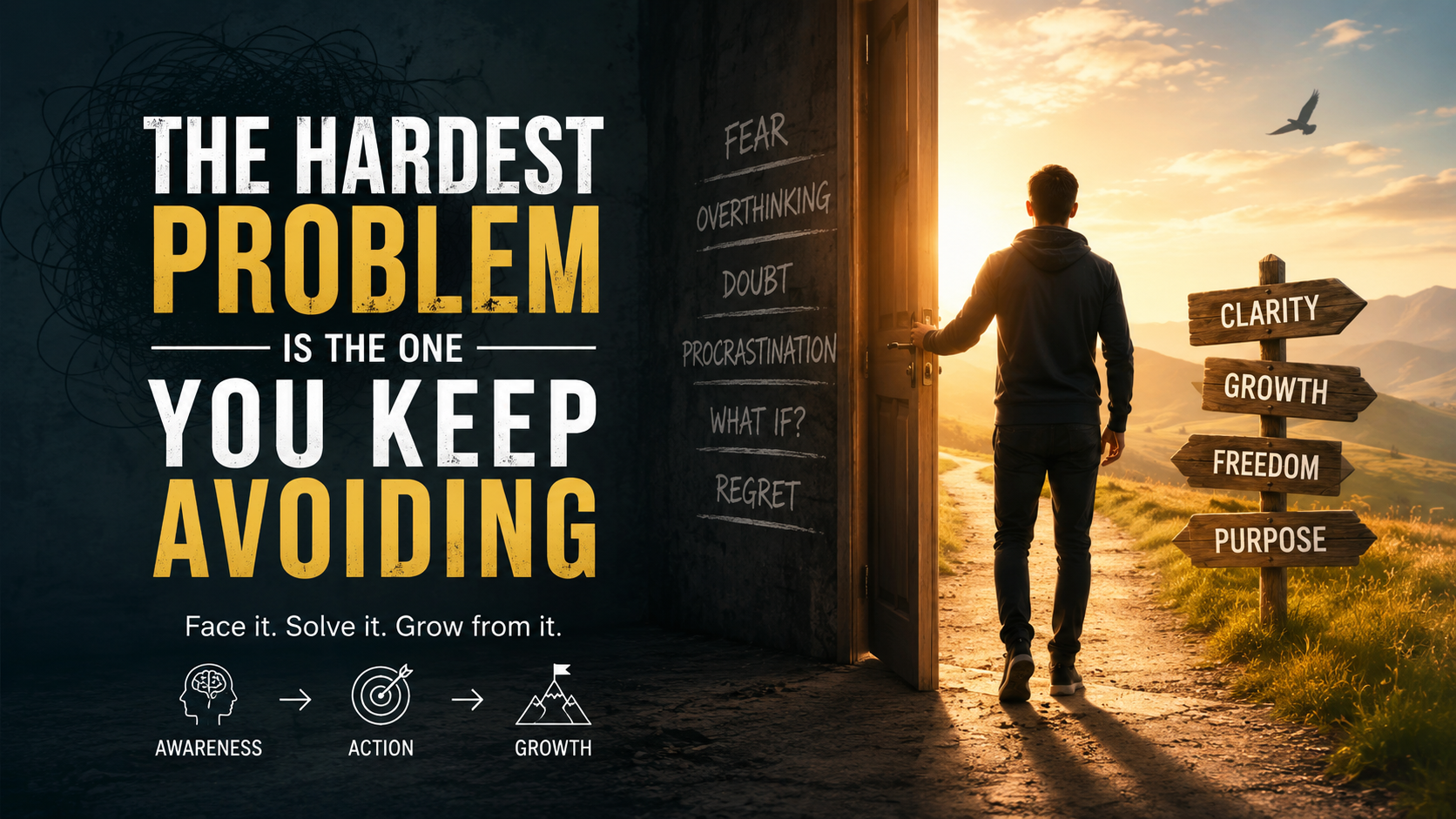
The doorway often looks frightening before it looks meaningful.
Systems Matter More Than Temporary Motivation
One of the biggest mistakes people make after solving a difficult problem is assuming the lesson will automatically stay forever.
It usually does not.
Human beings repeat patterns unless systems change.
Someone may solve burnout temporarily but return to overworking.
Someone may fix finances but continue impulsive habits.
Someone may rebuild health but abandon routines later.
Lasting change comes from systems, not emotional moments.
That means building routines capable of supporting future challenges.
Reflection habits.
Structured planning.
Financial discipline.
Better communication patterns.
Health routines.
Time boundaries.
Emotional awareness.
Strong systems reduce future chaos.
Because life will always introduce new problems. That part never changes.
What changes is your ability to respond without collapsing emotionally every time difficulty appears.
The Real Cost of Avoidance Is Lost Time
Money can return.
Careers can restart.
Skills can be rebuilt.
But time behaves differently.
Many people look back at certain periods of life realizing the real pain was not the difficulty itself. It was the years spent delaying necessary action.
The relationship that should have ended earlier.
The dream that stayed trapped in planning.
The apology never spoken.
The health issue ignored too long.
The opportunities missed because fear stayed in control.
Avoidance steals years silently.
And unlike dramatic failure, it often happens gradually enough that people barely notice it while living through it.
That is why facing problems matters so much.
Not because life suddenly becomes easy afterward.
But because unresolved fear stops controlling your direction.
There is freedom in confronting reality honestly.
Even painful reality.
Because clarity gives you something avoidance never can:
A chance to move forward.
And most of the time, once people finally face the thing they feared for months or years, they discover something surprising.
The problem was difficult.
But carrying it emotionally every day was even harder.