




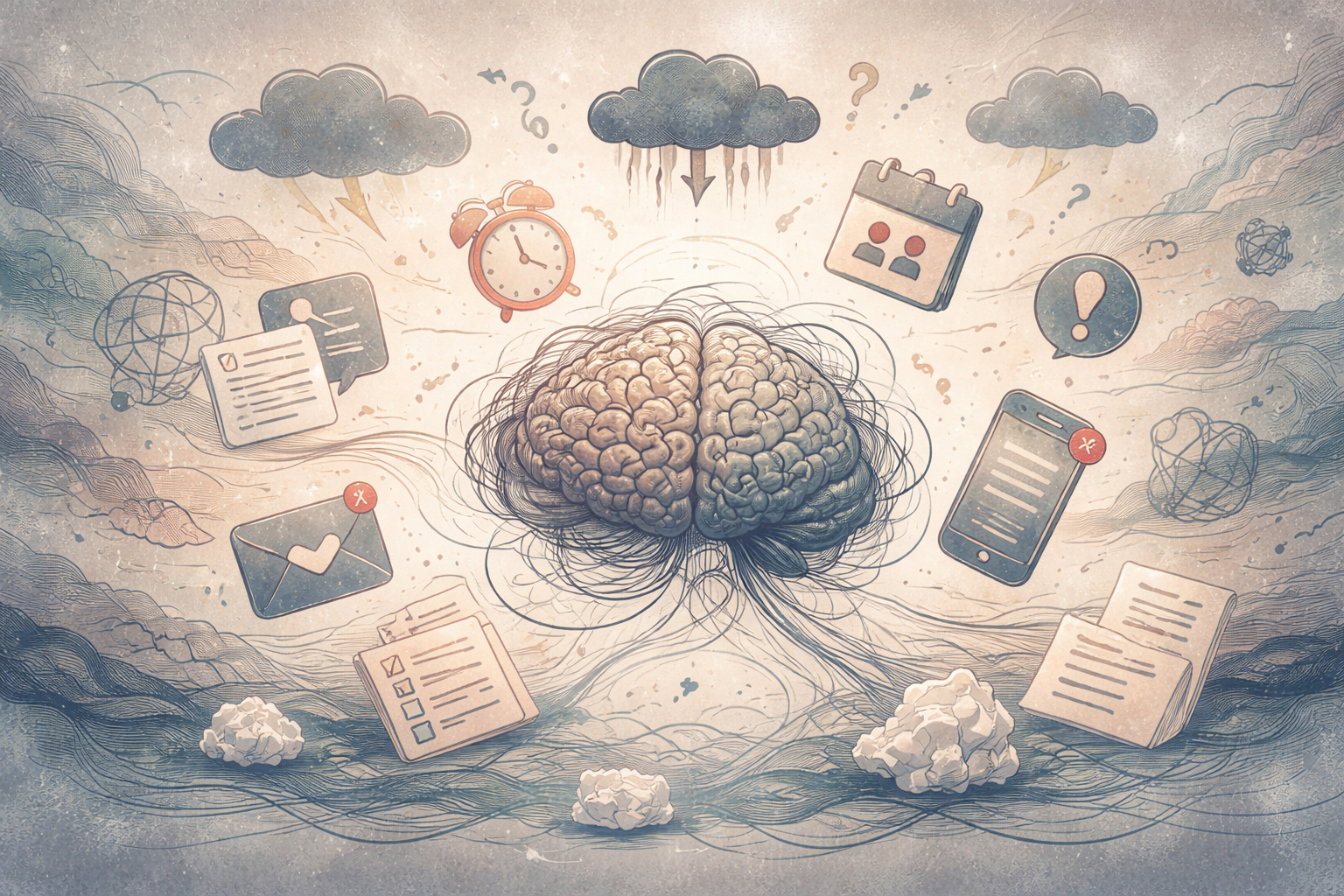
Mental exhaustion is one of the most misunderstood experiences in modern life because it rarely looks dramatic from the outside and yet it can quietly drain motivation, emotions, clarity, and even physical health without announcing itself loudly.
Many people assume they are simply tired, distracted, or losing discipline, while the reality is that their brain has been carrying continuous pressure for far too long without adequate recovery.
In a world that constantly praises productivity, speed, and availability, mental fatigue often becomes normalised, which makes it even harder to recognise when the mind is genuinely overwhelmed and needs restoration rather than criticism.
The danger of mental exhaustion is not only the fatigue itself but the way it slowly reshapes behaviour, emotions, relationships, and performance until everyday life starts to feel heavier than it used to.
The mind does not suddenly collapse overnight; instead, it sends subtle warning signs that many individuals ignore or misinterpret as personal flaws.
Understanding these signs can help people respond with compassion and awareness rather than guilt and self-judgment.
Emotional Sensitivity or Emotional Numbness
One of the earliest indicators of mental exhaustion is an unexpected shift in emotional responses, where some individuals begin crying easily over small triggers while others feel emotionally blank or disconnected from their own feelings.
At first glance these reactions appear opposite, yet they often originate from the same root cause, which is emotional overload. When the brain experiences prolonged stress, it tries to regulate pressure either by releasing emotions quickly or by temporarily shutting them down to avoid further overwhelm.
Crying in this context is not weakness and numbness is not coldness; both are protective responses designed by the nervous system to maintain balance when emotional capacity is stretched thin.
People often become confused or embarrassed by these reactions because they do not align with their usual personality, but the truth is that the brain is simply attempting to protect itself from continuous pressure.
Recognising this pattern allows individuals to respond with understanding rather than shame, which is the first step toward recovery.
Increased Procrastination and Slower Performance
Procrastination is frequently judged as laziness or lack of discipline, yet when mental exhaustion is involved it is usually a symptom of depleted cognitive energy rather than poor character.
Tasks that once felt simple begin to feel complex and starting work feels like pushing a heavy object uphill without momentum. The mind struggles not because it lacks ability but because its processing capacity has been drained by constant demands without enough rest.
This situation often creates a frustrating cycle where delays lead to guilt, guilt increases stress, and stress further reduces mental energy, which makes productivity even harder.
Many people attempt to solve this by forcing themselves to work longer hours, yet this approach usually worsens the fatigue instead of improving results.
Understanding that slower performance is often a signal of mental overload rather than incompetence can shift the focus from self-criticism to strategic recovery.
Sleep Problems and Unrefreshing Rest
Sleep disturbances are another strong sign of mental exhaustion, and they can appear in different forms such as insomnia, frequent waking, restless sleep, or even excessive sleeping without feeling refreshed.
Stress keeps the nervous system activated, which means the brain struggles to switch off even when the body is physically tired.
Some individuals lie awake replaying conversations or worrying about the future, while others sleep for long hours yet wake up feeling heavy and drained as if their rest lacked depth.
The paradox of being tired but unable to rest properly often confuses people because they assume the solution is simply more sleep.
In reality, the quality of rest depends heavily on emotional and cognitive relaxation rather than just the number of hours spent in bed.
Mental exhaustion reduces the restorative power of sleep, which means the brain remains partially alert instead of fully resetting overnight.
Physical Symptoms Such as Headaches, Tension, and Stomach Issues
Mental stress does not stay confined to the mind; it frequently manifests through the body in the form of headaches, tight shoulders, jaw clenching, back pain, shallow breathing, or digestive discomfort.
The connection between psychological pressure and physical sensation is strong because prolonged stress triggers physiological responses that tighten muscles and disrupt normal bodily functions.
Many individuals visit doctors repeatedly for recurring aches without realising that emotional overload might be the hidden cause.
When mental fatigue remains unresolved, the body begins to carry the burden that the mind cannot process alone. This is why relaxation techniques, stretching, breathing exercises, and mindful movement often provide relief even when the symptoms appear physical.
Understanding this mind-body relationship allows people to treat the root cause instead of only addressing surface discomfort.
Loss of Interest in Things You Once Enjoyed
Another noticeable warning sign is the gradual loss of interest in hobbies, music, social activities, or creative pursuits that previously felt energising.
This shift can be alarming because it creates a sense of emotional distance from one’s own passions.
When the brain is exhausted, it prioritises survival and essential functioning over pleasure, which means enjoyment temporarily loses intensity rather than disappearing permanently.
People may assume they have changed or lost their enthusiasm, yet in many cases the interest returns once mental pressure decreases and rest becomes consistent.
The mind simply diverts its limited energy toward basic functioning, leaving little space for creativity or leisure.
Recognising this pattern helps individuals avoid unnecessary self-doubt and instead focus on replenishing their mental resources.
Social Withdrawal and Avoiding Communication
Mental exhaustion often leads to reduced social interaction because conversations require emotional processing, attention, and energy that may already be depleted.
Individuals might delay replying to messages, ignore calls, or prefer solitude not because they do not care about others but because their mental battery is running low. Socialising, which once felt refreshing, begins to feel like effort rather than enjoyment.
This withdrawal is frequently misunderstood by both the person experiencing it and those around them, yet it is often a subconscious attempt to recharge.
Taking temporary space does not always indicate isolation or indifference; sometimes it is a necessary pause that allows emotional energy to rebuild.
Awareness of this dynamic can reduce misunderstandings and encourage healthier communication.
Feeling Overwhelmed by Small Tasks
Simple responsibilities such as replying to emails, cleaning a room, or preparing meals can begin to feel disproportionately heavy when the mind is mentally exhausted.
The workload itself may not be large, yet the internal experience feels intense because cognitive capacity has been stretched thin. This creates a sensation of everything piling up even when the objective demands are manageable.
People often judge themselves harshly during this phase, assuming they are becoming inefficient or careless, while in reality their mental resources are simply depleted.
Recognising that overwhelm is a sign of overload rather than incapability allows individuals to simplify tasks, prioritise rest, and gradually rebuild their sense of control.
Negative Thinking and Hopelessness
Mental exhaustion frequently alters perception, making challenges appear larger and solutions seem distant. The brain, when tired, tends to focus on potential failures rather than possibilities, which leads to self-doubt and pessimism.
This shift does not necessarily indicate long-term despair or permanent negativity; it often reflects temporary cognitive fatigue that affects clarity and optimism.
When mental energy is restored, perspective usually improves, which demonstrates that these darker thoughts are not fixed truths but symptoms of overload.
Understanding this distinction prevents individuals from defining themselves by temporary mental states and instead encourages patience and self-compassion.
Constant Tiredness Even After Sleeping
Waking up tired despite adequate sleep is one of the most frustrating signs of mental exhaustion because it defies expectations. The body may rest, yet the mind remains partially alert due to prolonged stress, which reduces the restorative quality of sleep.
People often describe this experience as feeling heavy, slow, and unrefreshed most days despite seemingly sufficient rest.
This persistent fatigue indicates that emotional and cognitive recovery is needed in addition to physical sleep.
Without reducing mental pressure, the brain struggles to reset fully, which prolongs the cycle of exhaustion.
Difficulty Focusing and Forgetfulness
Mental fatigue significantly affects attention span and working memory, which means even capable and intelligent individuals may find themselves rereading the same paragraph repeatedly, misplacing items, or struggling to make decisions.
This cognitive fog is not a reflection of intelligence or competence; it is a temporary reduction in mental bandwidth caused by prolonged pressure.
As mental energy returns through rest and balanced routines, focus and clarity often improve noticeably.
Recognising this connection helps individuals avoid unnecessary self-criticism and instead view forgetfulness as a signal that their mind needs recovery.
Irritability and Mood Swings
When mental reserves are low, emotional tolerance decreases and small inconveniences can trigger disproportionate reactions. Noise, delays, or minor mistakes may suddenly feel overwhelming because the brain has less capacity to regulate stress effectively.
This irritability does not mean a person has become unkind or impatient by nature; it simply reflects limited emotional bandwidth.
Understanding this pattern allows individuals to respond with compassion toward themselves and communicate their needs more clearly to others. Emotional fluctuations often stabilise once mental energy is replenished and stress levels decrease.
Why Recognising Mental Exhaustion Matters
Mental exhaustion is not a permanent identity or a personal flaw; it is a temporary state that arises when demands consistently exceed available resources.
Ignoring its warning signs increases the risk of burnout, emotional detachment, and physical illness, while recognising them early creates opportunities for timely recovery.
Rest, boundaries, meaningful conversations, creative expression, and moments of genuine relaxation all contribute to restoring balance.
The mind is not designed for endless pressure without pauses, and acknowledging its limits is not a sign of weakness but an act of responsibility.
When people listen to their internal signals and treat mental well-being with the same importance as physical health, clarity and energy gradually return.
The warning signs are not meant to label or frighten; they are reminders that the brain is asking for care, understanding, and space to recover, and when that care is provided consistently, resilience grows naturally over time.