


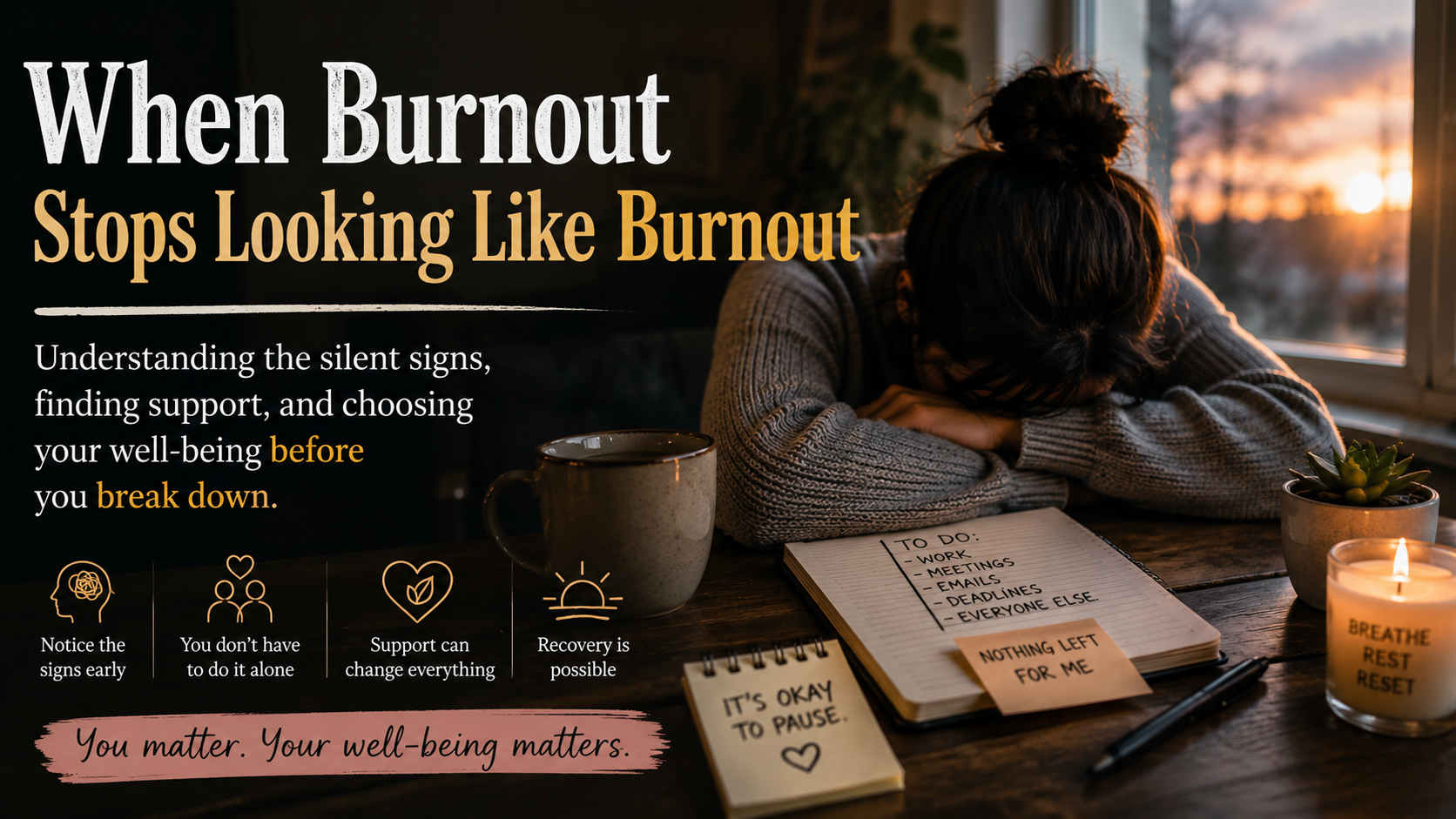
Burnout does not always arrive like a dramatic breakdown where a person suddenly collapses under the weight of life, work, responsibility, expectations, emotional pressure, and the constant performance required to appear functional in front of the world.
More often, burnout enters slowly, almost politely, without making noise, without announcing itself as a crisis, and without giving people enough warning to stop before the damage becomes visible.
It may begin with a small loss of interest in things that once felt enjoyable, a slight irritation over ordinary conversations, a tiredness that does not leave after sleep, or a strange feeling that even simple tasks now demand more energy than they should.
Many people imagine burnout as something that happens only to those working extreme hours, handling impossible deadlines, or living under visibly stressful conditions. That picture is incomplete. Burnout can happen to a student trying to meet endless expectations, a parent managing everyone else’s needs before their own, a professional who has become the reliable person in every room, a caregiver who has forgotten what rest feels like, or a person who has been emotionally strong for so long that even strength has started to feel exhausting. It can happen while life looks normal from the outside. That is what makes it so difficult to recognise.
The most painful part is that burnout often hides behind discipline, responsibility, maturity, and “just getting on with it.” A person may still attend meetings, reply to messages, cook dinner, show up for family, smile at neighbours, meet deadlines, and behave like everything is under control. Inside, however, something may be slowly shutting down.
Not because they are lazy. Not because they are weak. Not because they are ungrateful.
It happens because the human mind and body are not built to run endlessly without emotional fuel, recovery, support, and breathing space.
Burnout Begins Before We Have Words for It
One of the earliest signs of burnout is not dramatic sadness or obvious panic. It is often disconnection. A person may stop feeling excited about things they previously enjoyed, not because those things have lost meaning, but because their emotional system has become too tired to respond properly. Music may feel like background noise. Hobbies may feel like extra work. Social plans may feel heavy before they even happen. Even rest may become uncomfortable because the mind has forgotten how to settle.
This is why burnout can be confusing. A person may look at their life and think, “Nothing terrible has happened, so why do I feel this drained?” That question itself can become another burden. Instead of recognising exhaustion, many people judge themselves for not coping better. They compare themselves with others. They tell themselves everyone is busy, everyone is tired, everyone has problems, so they should stop complaining and push through.
The problem is that pushing through is not always strength. Sometimes it is survival wearing a professional outfit.
When every task feels heavier than it should, the mind is usually trying to communicate something important. The body may be saying it has carried too much for too long. The emotions may be asking for space. The nervous system may be asking to step out of constant alert mode. Burnout is not a moral failure. It is often a message that the pace, pressure, emotional load, or environment has become unsustainable.
The Loss of Patience Is Often a Warning Sign
Another sign people often miss is a sudden lack of patience. Small things begin to irritate. A delayed reply, a repeated question, a noisy room, a minor mistake, or a simple request can create an emotional reaction that feels larger than the situation deserves. This can make people feel guilty because they know they are not usually like that.
The truth is, patience needs energy. Kindness needs capacity. Emotional balance needs recovery. When someone is deeply depleted, their mind has fewer resources available to regulate ordinary frustrations. It is similar to a phone battery running at two percent. Every app becomes too much. Every notification feels annoying. Every task threatens shutdown.
This does not excuse hurting others, but it does explain why burnout can change someone’s reactions. A person who has always been calm may become easily irritated. Someone who usually listens patiently may start avoiding conversations. A person who normally cares deeply may begin to feel emotionally numb. These changes are not always personality changes. They are often exhaustion showing itself through behaviour.
Unfortunately, society tends to praise people for being endlessly available, endlessly calm, endlessly giving, and endlessly productive. We celebrate the person who never says no, who always delivers, who handles pressure without complaint, who supports everyone else while needing nothing in return. Then, when that person starts becoming impatient, withdrawn, or tired, people wonder what happened.
What happened is that a human being was treated like a resource.
Why Burnout Feels So Lonely
Burnout can feel incredibly isolating because it is often invisible. People may not know how much effort it takes for someone to appear normal. They may see the finished work but not the mental struggle behind it. They may see the smile but not the heaviness before leaving home. They may hear “I’m fine” and accept it because it is easier than asking a second question.
Many people experiencing burnout also become skilled at hiding it. They do not want to worry others. They do not want to seem dramatic. They do not want to be judged as incapable. They may fear that admitting exhaustion will make them look unprofessional, weak, needy, or difficult. So they minimise everything. They call it a bad week. Then a bad month. Then a rough phase. Eventually, burnout becomes their normal operating system.
Loneliness grows when people believe nobody would understand what they are feeling. It grows when they think they have no right to be tired because others have it worse. It grows when they are surrounded by people but still feel emotionally unsupported. It grows when they keep performing wellness instead of experiencing it.
That loneliness is dangerous because burnout does not heal well in silence. Human beings need connection, honest conversation, and safe spaces where they do not have to edit every emotion before speaking. Support does not solve everything instantly, but it can stop a person from carrying everything alone.
Rest Is Not Always Enough
A common misunderstanding is that burnout can be fixed by taking a weekend off, sleeping longer, watching a film, or booking a short holiday. Rest matters, but burnout is not always solved by basic rest because burnout is not only physical tiredness. It is emotional depletion, mental overload, nervous system fatigue, and sometimes a loss of meaning or control.
A tired person may recover after sleep. A burned-out person may sleep and still wake up feeling heavy. A tired person may enjoy a break. A burned-out person may feel guilty while resting because there is always something pending. A tired person may return refreshed. A burned-out person may return to the same pressure that created the exhaustion in the first place.
This is why burnout recovery requires more than temporary escape. It requires honest reflection on what is draining the person in the first place. Is the workload too high? Are boundaries missing? Is there emotional stress at home? Is the person constantly pleasing others? Are they afraid to disappoint people? Are they living in a role that no longer matches who they are becoming? Are they giving emotional labour without receiving support in return?
Sometimes the source is obvious. Sometimes it is not. But recovery begins when a person stops treating themselves like a machine that simply needs charging and starts seeing themselves as a human being who needs care, meaning, connection, and limits.
The Pressure to Be Fine Makes Burnout Worse
Modern life has created a strange culture where everyone is expected to be productive, positive, responsive, ambitious, emotionally balanced, financially responsible, physically healthy, socially available, and personally fulfilled at the same time. That is a ridiculous amount of pressure, yet many people carry it as if it is normal.
People are expected to answer messages quickly, manage careers, maintain relationships, stay informed, stay fit, build side projects, improve themselves, support family, plan the future, and somehow remain peaceful while doing all of it. Even leisure has become performative. Rest must be aesthetic. Healing must be documented. Growth must be visible. Happiness must look shareable.
In such a world, burnout is not surprising. It is almost predictable.
The pressure to appear fine delays people from asking for help. They may think support is only for those who are completely falling apart. They may believe therapy, counselling, coaching, or emotional support is unnecessary unless life has reached crisis level. This belief keeps many people stuck longer than they need to be.
Support should not be treated as a last resort. It can be a maintenance tool, a thinking space, a pressure valve, and a place to understand patterns before they become painful cycles. Talking to someone does not mean a person is broken. It means they are willing to stop carrying invisible weight without reflection.
Boundaries Are Not Selfish
Burnout often grows in the absence of boundaries. Many people feel uncomfortable saying no, asking for time, protecting their energy, or admitting they cannot take on more. They confuse kindness with availability. They confuse loyalty with overextension. They confuse being dependable with being endlessly accessible.
Boundaries are not walls built against people. They are doors with handles. They allow relationships, work, and responsibilities to continue without destroying the person inside them. A boundary may sound like, “I cannot take this on today,” or “I need time before I respond,” or “I am not available this weekend,” or “I need support with this.” These sentences can feel difficult at first, especially for people who are used to being the helper, the fixer, or the calm one.
However, without boundaries, resentment builds. Exhaustion deepens. Relationships become heavy. Work becomes suffocating. The person begins to disappear under the roles they are trying to maintain.
Healthy boundaries protect both the person and the quality of what they give. Someone who is rested can love better, work better, think better, listen better, and live better. Someone who is constantly drained may still give, but the giving starts coming from survival rather than genuine capacity.
Recovery Starts With Noticing
The first step toward dealing with burnout is not making a massive life change overnight. It is noticing. Notice when everything feels heavier than usual. Notice when irritation becomes frequent. Notice when joy feels distant. Notice when rest no longer restores. Notice when conversations feel like effort. Notice when your body feels tense even during calm moments. Notice when you keep saying “I’m just tired” but the tiredness has become part of your identity.
Noticing matters because it creates a pause between experience and reaction. It allows a person to ask, “What do I need?” rather than simply asking, “How do I keep going?” That difference is powerful. One question leads to survival. The other leads to care.
Writing things down can help. Not in a dramatic way, but in a practical way. Track what drains energy and what restores it. Pay attention to people, tasks, environments, and expectations that leave you feeling empty. Also pay attention to the small things that help, such as walking outside, speaking honestly with a trusted person, reducing screen time, eating properly, sleeping consistently, or taking a real break without guilt.
Burnout recovery is often built through small, repeated acts of self-respect. It is not always glamorous. Sometimes it looks like cancelling a plan, asking for help, eating a proper meal, going to bed earlier, taking lunch away from the laptop, turning off notifications, or admitting that you are not okay without turning it into a joke.
Professional Support Can Make the Load Lighter
There are moments when personal reflection and lifestyle adjustments are helpful, but not enough. When burnout becomes persistent, when emotional numbness grows, when anxiety increases, when motivation disappears, or when daily life starts feeling difficult to manage, professional support can be genuinely valuable.
A therapist, counsellor, or qualified mental health professional can help a person understand the roots of their exhaustion, identify patterns, process stress, build healthier boundaries, and develop coping strategies that fit their real life rather than some perfect wellness routine that only works for people with unlimited time and no bills. Having a space where one can speak without performing, defending, explaining, or protecting everyone else’s feelings can feel deeply relieving.
The point of support is not to magically remove every problem. Life will still have responsibilities, stress, deadlines, family demands, uncertainty, and difficult days. The value is that a person no longer has to navigate all of it alone. They can begin to understand themselves with more honesty and less judgement.
That matters because burnout often convinces people that they are failing. Support can help them see that they are not failing. They are overloaded, under-supported, and in need of a more sustainable way to live.
Burnout Is a Signal, Not a Life Sentence
Burnout can feel frightening because it changes how a person experiences themselves. Someone who was once motivated may feel flat. Someone who was once patient may feel sharp. Someone who once enjoyed life may feel disconnected from it. These changes can make people wonder whether they have lost who they are.
But burnout is not always the end of something. Sometimes it is the beginning of a necessary correction.
It can be the moment a person stops measuring their worth through output. It can be the moment they learn that being strong does not mean being silent. It can be the moment they realise that rest is not laziness, help is not weakness, and boundaries are not selfish. It can be the moment they finally start building a life that does not require them to abandon themselves to keep everything else standing.
Healing from burnout takes time, and it does not happen through one inspiring quote, one day off, or one perfectly planned routine. It happens through honesty, support, patience, and practical changes that make daily life more humane. It happens when people stop waiting for complete collapse before taking their own needs seriously.
Burnout may begin softly, but recovery can begin softly too. It can begin with one honest sentence: “I am not okay, and I need support.” That sentence is not defeat. It is wisdom. It is the mind and body asking to be treated with care after carrying too much for too long.
A meaningful life should not require constant exhaustion as proof of commitment. Work matters, family matters, ambition matters, responsibility matters, but the person carrying all of it matters too. When life starts demanding twice the energy for half the joy, it may be time to pause, listen, and choose support before survival becomes the only setting left.