




A story about the burdens we carry without noticing and the courage it takes to put them down
By the time Meera reached the station, the train had begun to pull away, carrying her mother back toward Jaipur while she stood beneath the yellow platform lights with an empty steel tiffin in one hand.
Through the darkened glass, she caught one final glimpse of her mother’s face, still concerned, still unconvinced by the cheerful answers Meera had offered during the weekend.
She lifted her hand until the last carriage disappeared, then remained beside the tracks for several minutes, as though another train might arrive and return the words she had been unable to say.
Her mother had asked the same question three times during the visit: “Are you happy?” Each time, Meera had smiled and found something ordinary to discuss, because she had become remarkably skilled at sounding fine, even though her body no longer believed her.
For months, she had been waking with a tight jaw and an ache between her shoulders that lasted until bedtime. Some afternoons, while sitting at her desk in the publishing office, she felt as if an invisible belt had been fastened around her chest.
She blamed the computer screen, the traffic, her age, and the mattress she kept meaning to replace, because practical explanations were easier to manage than emotional ones.
On Monday morning, her colleague Farah placed a mug of tea beside her keyboard and asked whether she had slept at all.
Meera laughed and said she had spent the weekend entertaining her mother, although the truth was that her mother had cooked, cleaned, and watched her daughter move through the flat like someone completing a long list of duties in a house that no longer felt like home.
“You look tired in a way sleep will not fix,” Farah said.
Meera almost dismissed the remark, but it followed her through the day, from the meeting where she accepted another delayed manuscript to the call in which her brother expected her to settle a family dispute. It was still with her when she opened a message from Rohan, the man who had spent the previous year neither committing to their relationship nor ending it.
I have been thinking about you. Can we talk sometime?
Her heart responded before her judgment could intervene. For several seconds, hope rose with the same familiar force, and she imagined an apology, an explanation, perhaps even the future he had repeatedly promised whenever he feared losing her.
Then she remembered the unanswered calls, the cancelled plans, and the evening he had told her that she expected too much simply because she wanted to know whether they were building a life together.
Meera typed three different replies and deleted each one. She finally turned the phone face down, although his message continued to occupy the room.
That night, a power cut left her alone with the exhaustion she had been explaining away. She thought of the promises she had made to other people, the disagreements she had absorbed to keep families peaceful, and the invitations she had accepted when she desperately needed time for herself.
She also thought about Rohan, and for the first time she admitted that she was not waiting for him to choose her. She was waiting for his choice to prove that she had been worthy all along.
The recognition hurt because it was true.
When the electricity returned, Meera opened the cupboard above the refrigerator in search of fresh candles. A blue ceramic bowl fell forward, struck the counter, and cracked cleanly into two pieces. It had belonged to her grandmother, who used it every summer to hold ripe mangoes.
Meera stared at the broken halves and began to cry with an intensity entirely out of proportion to a bowl.
She cried for the relationship she had kept alive long after affection had been replaced by uncertainty.
She cried for the guilt she carried whenever her brother was unhappy, her mother worried, or someone at work failed to meet a deadline.
She cried for every agreeable answer that had cost her an evening, a boundary, or a little self-respect.
Most of all, she cried because she could no longer remember when endurance had become the main measure of her strength.
The following morning, she took the broken bowl to a repair shop she had passed many times near the old market. The shopkeeper, an elderly woman named Lata, examined the pieces beneath a bright lamp and explained that the bowl could be repaired, but the line would remain visible.
“Then perhaps it is ruined,” Meera said.
Lata looked at her over the frame of her glasses. “Visible is not the same as ruined. People confuse those things more often than they should.”
The answer stayed with Meera because it applied to far more than pottery. She had spent years hiding every fracture in herself, believing that pain became dangerous when another person could see it. She had never considered that concealment might be adding to its weight.
Before leaving the shop, she called Farah and said she would not be coming to work that day. The sentence felt almost criminal, even though she had not taken a sick day in nearly two years. She expected interrogation, inconvenience, and perhaps disappointment, but Farah simply told her to rest and promised to handle the morning meeting.
When she reached home, she opened a notebook and wrote a heading across the first page: Things I am carrying.
At first, she felt foolish. Then the list began to grow.
She wrote about the shame of a failed relationship, the belief that a good daughter must prevent her parents from worrying, the office habit of rewarding dependable people with everyone else’s unfinished work, and the friends who were always unavailable when she needed care in return.
Several burdens were not responsibilities at all, but old conversations she kept retrying, comparisons with other people’s edited lives, and apologies she still expected from people who had never accepted responsibility.
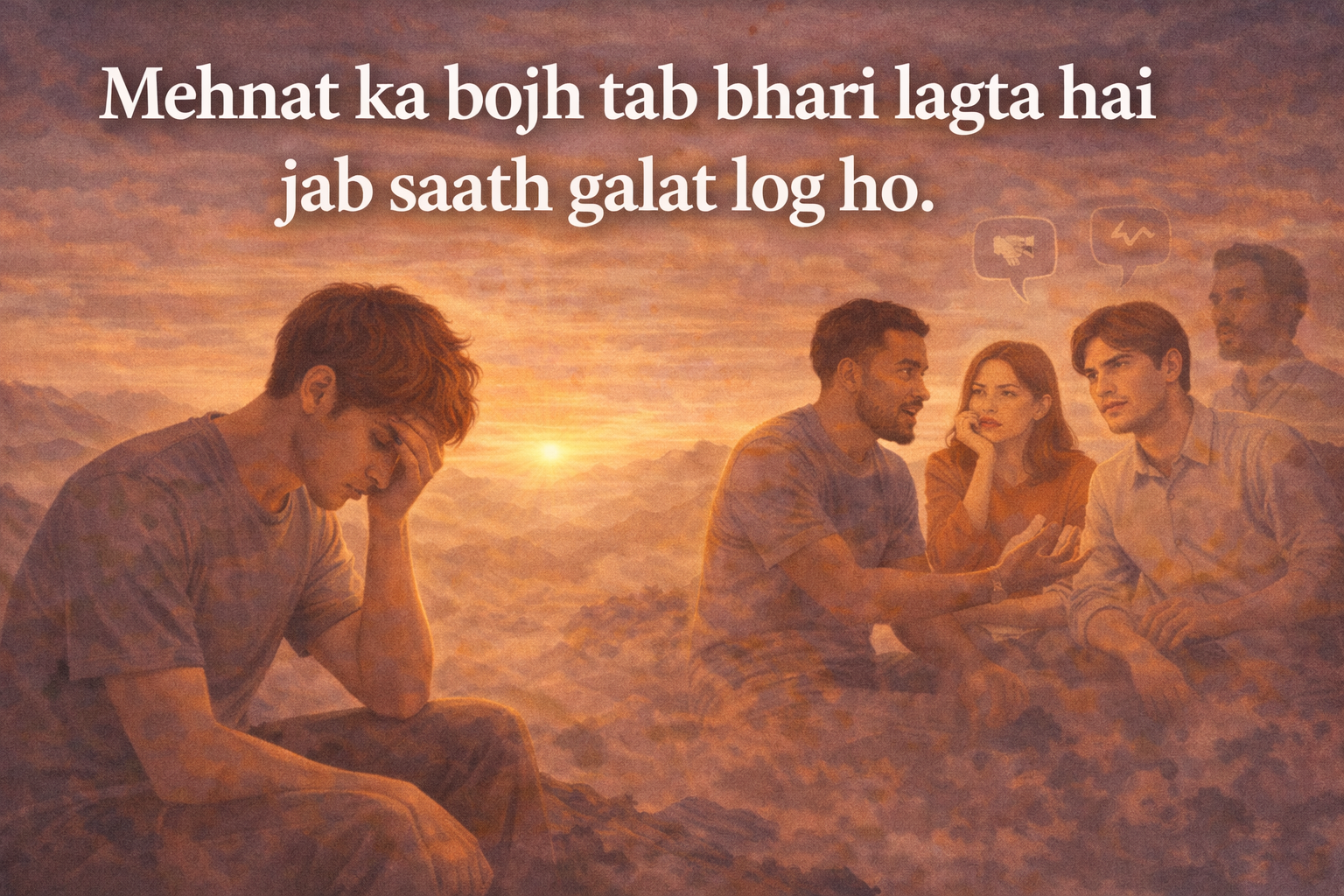
Seeing these burdens in her own handwriting changed their shape. Inside her mind, they had blended into a single feeling of failure, but on paper they became separate choices, fears, habits, and relationships.
Some required action, while others required acceptance, and a few had never belonged to her in the first place.
Her first act was so small that nobody else would have called it brave. She replied to her manager and said she could not take the additional manuscript unless another deadline was moved. Her fingers trembled before she pressed send. Ten minutes later, he agreed to reassign the project, and the world continued without punishment.
Her second act was harder. She called Rohan and asked him to meet her at the café where they had once planned an imaginary trip to Istanbul. He arrived twenty minutes late, carrying the easy smile that had reopened her hope many times before. He said he missed her, that the past few months had been confusing, and that he did not want to lose what they shared.
Meera listened until he finished, then asked what he was actually offering.
His answer wandered through work pressure, family expectations, timing, and the importance of not forcing decisions. A year earlier, she would have translated his hesitation into possibility. This time, she heard the answer he was avoiding.
“I care about you,” she said, keeping her voice steady, “but I cannot keep living inside a decision you refuse to make.”
He looked wounded and accused her of turning love into an ultimatum. The old guilt arrived immediately, urging her to comfort him and soften the boundary until it meant nothing. She recognised the impulse and allowed it to pass without obeying it.
When she left the café, grief walked beside her. Choosing herself did not produce instant freedom, and truth did not become painless simply because it was necessary.
She cried in the taxi, slept badly for a week, and reached for her phone more than once. Yet beneath the sorrow there was something firm, the growing knowledge that she would no longer abandon herself merely to prevent another person from leaving.
Over the next several months, Meera began making room in her life with deliberate care. She stopped answering family calls as though every disagreement were an emergency. She told her mother when she was struggling instead of offering polished reassurances.
To her surprise, honesty did not burden her mother as much as distance had; it gave them a chance to speak as two women rather than as a worried parent and a permanently capable child.
She also visited a counsellor and began noticing how frequently she confused being needed with being loved, and how often loyalty had required her to tolerate what affection should never demand.
The ache in her shoulders eased, she slept through more nights, and she returned to the classical dance class she had abandoned years earlier.
There were setbacks, because no life changes in a straight line, but she learned to treat them as signs requiring attention rather than evidence that she had failed.
Three months after the power cut, Lata called to say that the blue bowl was ready. Meera returned to the repair shop and found it resting beneath the same bright lamp. A fine golden line now travelled across its surface where the two broken pieces had been joined. The repair had not restored the bowl to its former condition, but it had made the history of the break part of its beauty.
At home, Meera filled it with mangoes and placed it in the centre of the dining table. Her mother noticed the golden seam during her next visit and ran a finger along it.
“Your grandmother would have kept using it,” she said. “She never threw away anything that could still hold something good.”
Meera looked at the bowl, then at the sunlight spreading across the table. She knew that people were not objects to be repaired, and she no longer wanted every wound turned into a decorative lesson.
Some losses remained losses, while certain doors needed to stay closed. Healing had not erased what happened, and it had not transformed every painful memory into gratitude.
What it had done was teach her to distinguish love from obligation, strength from concealment, and responsibility from blame. It had shown her that a heavy heart rarely becomes burdened in a single dramatic moment.
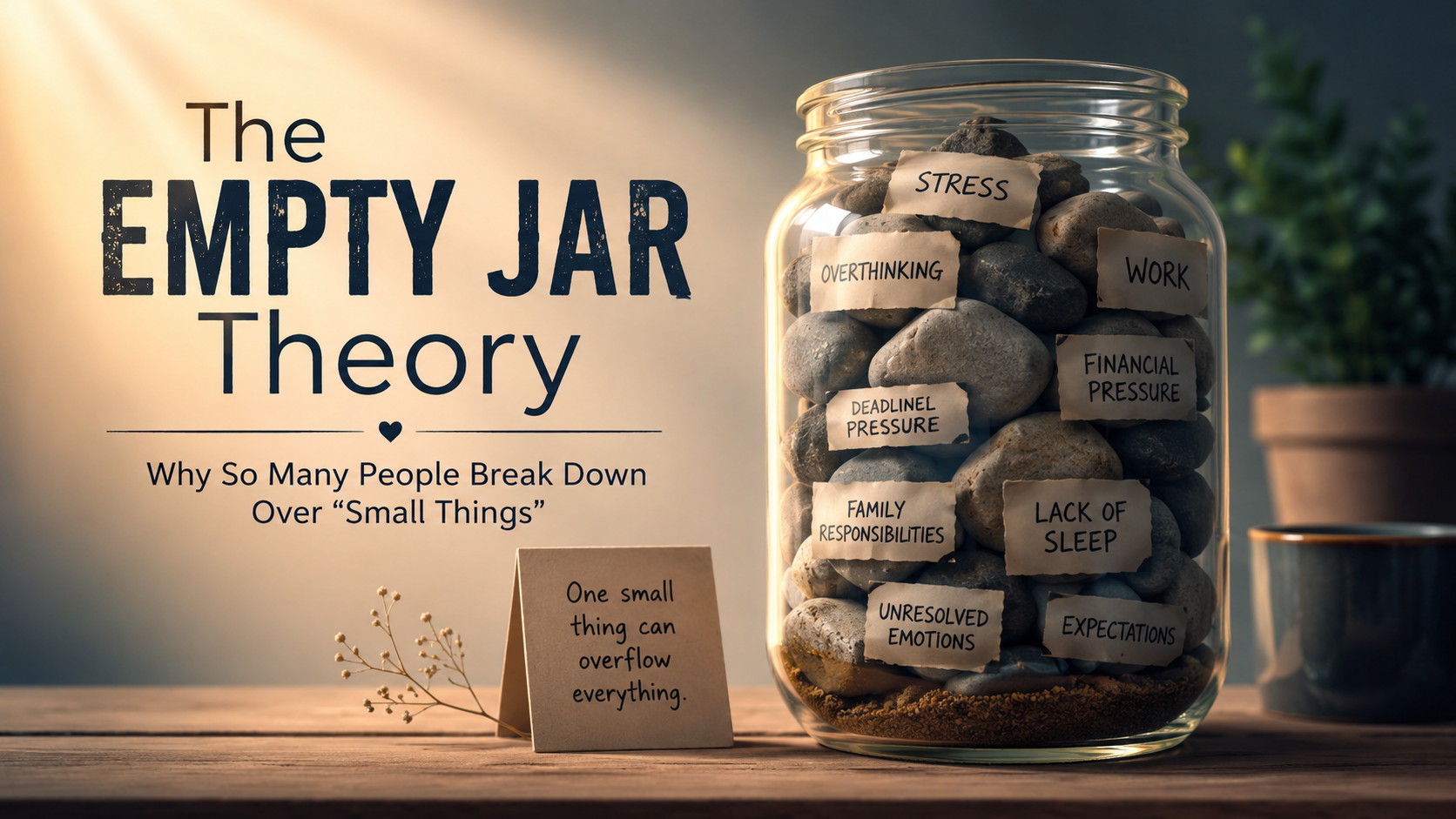
More often, the weight gathers through hundreds of small abandonments: the truth swallowed to avoid conflict, the rest postponed without reason, the boundary surrendered to preserve approval, and the joy treated as less important than duty.
That evening, after her mother had gone to bed, Meera stood on the balcony and watered the jasmine. The city around her was still demanding, imperfect, and beyond her control, while the future held no promise of remaining easy. Yet she no longer believed she had to carry every fear before it happened or solve every problem before someone asked.
There would always be responsibilities worth accepting and people worth standing beside, but love did not require her to disappear beneath either of them.
She could care without becoming responsible for everyone, grieve without returning to what had wounded her, and ask for support before pain turned into isolation.
Putting a burden down did not mean she was giving up, because the heart was never meant to become a storeroom for every regret, expectation, unanswered question, and borrowed guilt.
The next morning, she ate breakfast at the table instead of standing over the kitchen sink. She sliced a mango from her grandmother’s bowl, opened the balcony doors, and let the day arrive without deciding in advance how much of it she would have to endure.
Nothing outside her had changed overnight, but she had finally stopped calling the weight normal, and that was where her lighter life began.